METEOROLOGIST
TUESDAYS & THURSDAYS
9:30 AM PT / 12:30 PM ET
ON METEOROLOGY
19 NOV 2026 - 4 FEB 2027
DURATION:
8 WEEKS
TUESDAYS & THURSDAYS
9:30 AM PT / 12:30 PM ET
Master the radar, satellite, and AI-assisted forecasting tools operational meteorologists rely on, and turn atmospheric theory into real operational forecasting skill.
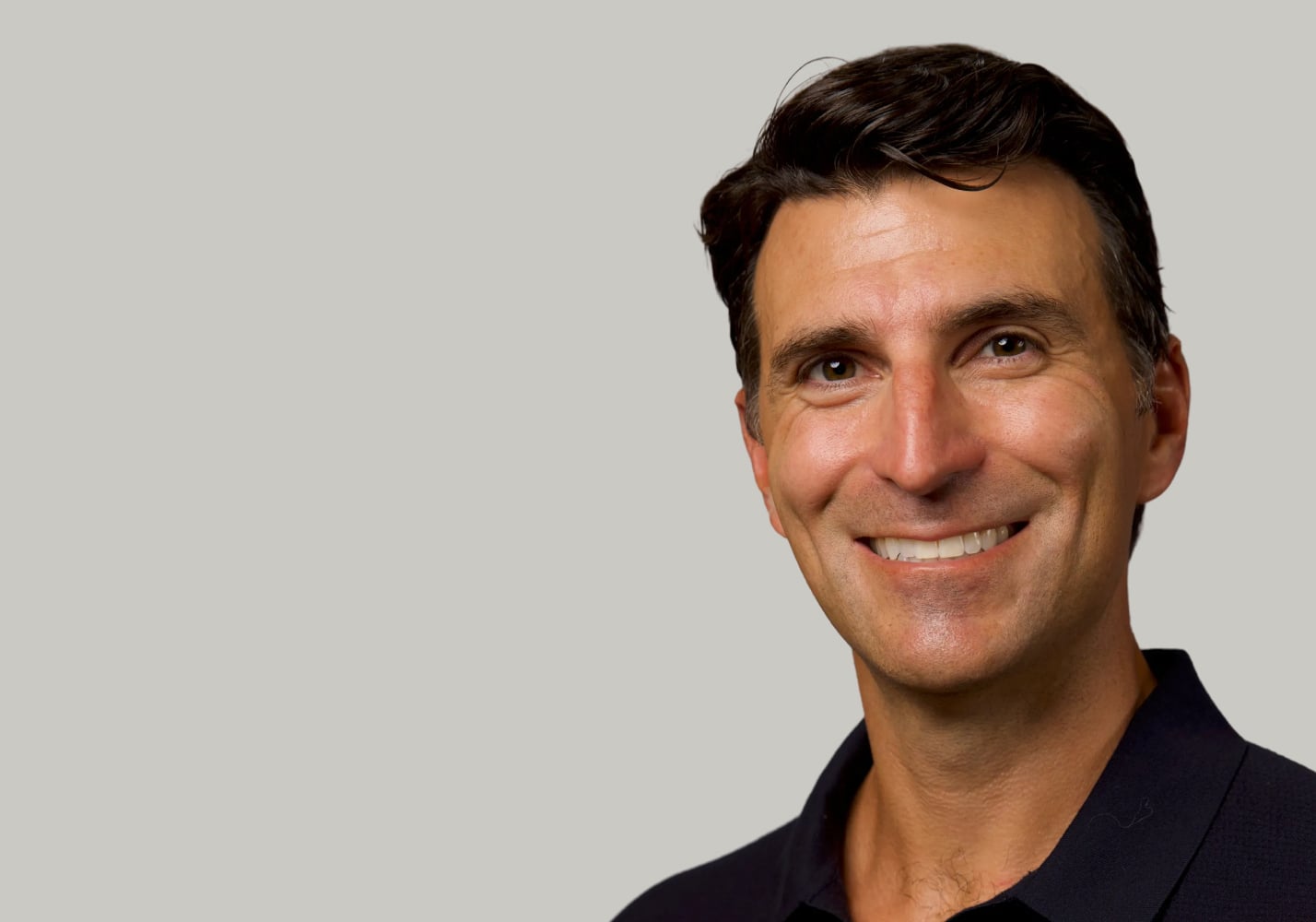
Guided by Eric Fisher, Chief Meteorologist at WBZ-TV | CBS Boston, you'll graduate with a complete 360° Extreme-Weather Forensic Analysis and Briefing built to prove real-world readiness to employers.
THIS COURSE IS FOR YOU, IF...
-
YOU ARE A STEM GRAD OR JUNIOR DATA/GIS ANALYST
You understand atmospheric theory, but you've never touched a real forecasting desk. This meteorologist course puts you hands-on with Skew-T diagrams, dual-pol radar, and AI-assisted NWP model evaluation. You'll leave able to write technical Area Forecast Discussions and hold a forensic portfolio project built for operational forecaster and aviation meteorology roles.
-
YOU ARE A MEDIA PRO OR EMERGENCY MANAGER
Turning complex weather data into a clear public warning is the hard part. These meteorology classes teach plain-language risk communication, AI-assisted dashboard building, and on-camera briefing technique. You'll leave able to craft precise emergency alerts and deliver stakeholder briefings with real operational confidence.
-
YOU ARE A WEATHER HOBBYIST OR CAREER SWITCHER
You follow the weather closely, but you've never had formal operational training. These online meteorology classes build real forecasting skill across radar, NWP models, and sector-specific applications like aviation and hydrology. You'll graduate with a professional forensic portfolio project and direct exposure to working meteorologists across the industry.
Nine workshops and six assignments put you inside real forecasting decisions: identifying storm signatures on dual-pol radar, running a rapid-response warning simulation, and comparing GFS against ECMWF model output five days out. Every assignment builds directly toward your final project.
Two case studies dig into thundersnow radar analysis and EF-scale damage survey estimation. Four guest practitioners, including a forensic meteorologist and a MyRadar senior meteorologist, bring in perspective from forensic, broadcast, and warning coordination roles you won't find in a textbook.
Your final project is a complete 360° Extreme-Weather Forensic Analysis and Briefing: an AI-built data dashboard, a technical Area Forecast Discussion, and a stakeholder briefing video. It's a real, defensible work sample for forecaster, forensic, and consulting roles alike.
- Serves as Chief Meteorologist for WBZ-TV News in Boston, anchoring weather segments across four nightly broadcasts
- Contributes to CBS News nationally, reporting live severe weather for CBS Evening News and CBS Mornings
- Won multiple New England Emmy Awards and named Boston's "Best TV Weatherman" by Boston Magazine
- Spent three years as a meteorologist at The Weather Channel, producing national forecasts for NBC Nightly News, TODAY, and MSNBC
- Authored Mighty Storms of New England (2021), examining historic weather events across the region
- Holds a B.S. in Atmospheric Science with a minor in Mathematics from SUNY Albany

Meet your instructor and get oriented with the course structure, then start thinking about the historical extreme-weather event you'll track across every weekly assignment.
- Course structure and expectations
- Final project introduction
- Selecting a high-impact weather event
Get comfortable reading the meteorological data sources you'll use all course long, from wind formation to the Skew-T log-P diagram's role as a thermodynamic workspace.
- The four scales of meteorology
- Forces that produce wind
- Adiabatic lapse rates and stability
- Skew-T log-P diagram introduction
- Workshop: Analyze North American weather stories and prepare a short briefing
Identify the processes that form different weather systems and cloud types, using parcel theory to explain why air rises, cools, and condenses.
- Vertical motion, convection, and air density
- Parcel theory fundamentals
- Four types of instability
- Cloud types and their formation
- Lab: Virtual fluid-dynamics parcel visualization
Assignment #1: Lock Your Event + First Profile
Select the historical extreme-weather event your project will track, and write a one-paragraph justification of its impact.
Understand the largest players on the weather field, from Hadley and Ferrel cells to jet streams and their role in shaping global patterns.
- Hadley, Ferrel, and Polar cells
- Trade winds and global heat distribution
- Jet streams and temperature gradients
- Decoding METARs
- AI Lab: Plot Lower 48 winter impacts across ENSO phases
Take a closer look at how climate change affects weather trends over time, and discover the industries with a vested interest in tracking them.
- Weather versus climate
- Validating trustworthy reporting sources
- Identifying high- versus low-certainty climate trends
- Discussion: Climate risk across global industries
Assignment #2: Put It in Climatological Context
Create a visualization comparing your event's ingredients against long-term climatology.
Spot different wind signatures in storms and become proficient reading dual-polarization radar products, from precipitation type to storm structure.
- Radar fundamentals and evolution
- Dual-polarization precipitation and structure signatures
- Erroneous signatures and atmospheric ducting
- Phased array radar preview
- Case study: Thundersnow and storm structure via archived dual-pol radar
Put multiple satellite channels to use identifying real-world phenomena, from storm systems to wildfire hot spots.
- GOES and polar-orbiting satellites
- Visible, infrared, and water-vapor channels
- Geospatial visualization with GIS
- Agricultural and water-management applications
- Workshop: Multi-channel satellite phenomena identification
Assignment #3: Reconstruct the Synoptic Setup
Pull archived surface, upper-air, satellite, and radar data to build a timeline of your event.
Understand the ingredients that create severe weather, and the ones that can lead to a forecast bust.
- Mesoscale convective systems and complexes
- FLASH guidance for flash-flood prediction
- CAPE, CIN, and shear on the Skew-T
- Moisture sources and storm initiation
Combine dual-pol radar signatures with storm thermodynamics to produce your own timely severe-weather warnings.
- Severe-storm radar signatures
- Hail formation and detection
- NWS severe watch/warning criteria
- Workshop: Rapid-response mesoscale warning simulation
- Case study: EF-scale damage survey estimation
Assignment #4: Take a Microscope to the Mesoscale Features
Annotate the mesoscale features that drove your event's ground-level impacts.
Learn how the full vertical thermal profile determines precipitation type, and apply it to accurately forecast winter weather.
- The vertical thermal profile and snowflake types
- Reading the Skew-T for winter setups
- Synoptic snow setup patterns
- NWS winter product types
- AI Lab: Winter onset and traffic impact plotting
Apply conceptual knowledge of tropical systems to think through messaging challenges for their varying, unique impacts.
- Warm-core structure and low shear
- Eye, eyewall, and rainband anatomy
- Track versus intensity forecasting
- Hazard bundle: surge, wind, flooding, tornadoes
- Workshop: Tropical cyclone hazard messaging briefing
Gain insight into the differences between physics-based guidance suites and how AI models may improve on them.
- Computer models and big data in forecasting
- Global versus high-resolution guidance
- AI modeling versus physics-based modeling
- Lab: Model Showdown comparing outputs five days out
Assignment #5: Identify Which Model Data Was Most Useful
Compare GFS and ECMWF output for your event and finalize your Part 1 AI-assisted dashboard.
Understand the unique demands of forecasting across sectors beyond broadcast and government work.
- Forensic meteorology
- Aviation meteorology and incident meteorologists
- Hydrology and energy-load forecasting
- Guest speaker: Consulting or forensic meteorologist
Understand the unique demands of forecasting across sectors beyond broadcast and government work.
- Forensic meteorology
- Aviation meteorology and incident meteorologists
- Hydrology and energy-load forecasting
- Guest speaker: Consulting or forensic meteorologist
Take scientific knowledge and translate it into plain language the public can act on under time pressure.
- Translating data into plain language
- Psychology of risk communication
- Workshop: 280-character emergency alert drafting
Assignment #6: Reproduce the Messaging
Record a short video briefing the public or emergency managers on your event's hazards.
Examine precision versus accuracy, and the value of analyzing your own forecasting misses.
- Addressing busted forecasts
- Statistical error analysis
- How forecast accuracy has improved over time
Present your completed forensic briefing to the class and receive live feedback from peers and your instructor.
- Live student presentations
- Peer and instructor feedback
- Course wrap-up
What our students say
"I really enjoy the format of the course. Lectures with real life examples and an ongoing case study. Also built in 20 minutes at the end of each class for questions is helpful."
"Overall I'm impressed with the level of detail and explanation around particular topics and subjects. There's a real depth to each module which for learning allows the information to stay in your brain."

"The group activities, they allow us to interact and exchange ideas, plus the way it is structured is challenging and mind twisting as we collaborate in different parts of the ideation."

"I enjoyed the structure of the class. I like how we learned about a topic and practiced it in the workshops. It’s helped me to apply what I learned!"