


WATCH DESIGNER
MONDAYS & WEDNESDAYS
5:30 PM PT / 8:30 PM ET
ON WATCH DESIGN
1 JUN 2026 - 27 JUL 2026
DURATION:
9 WEEKS
MONDAYS & WEDNESDAYS
5:30 PM PT / 8:30 PM ET
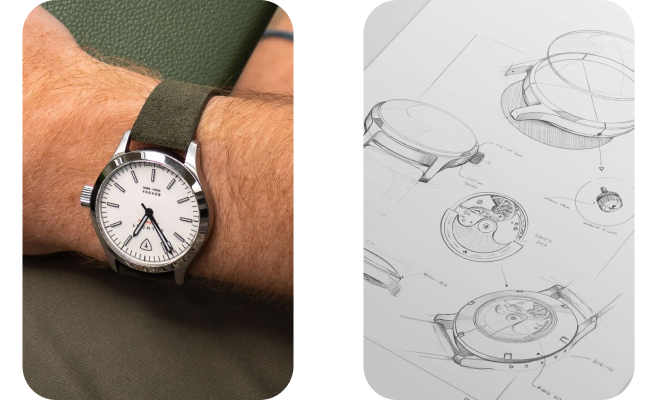
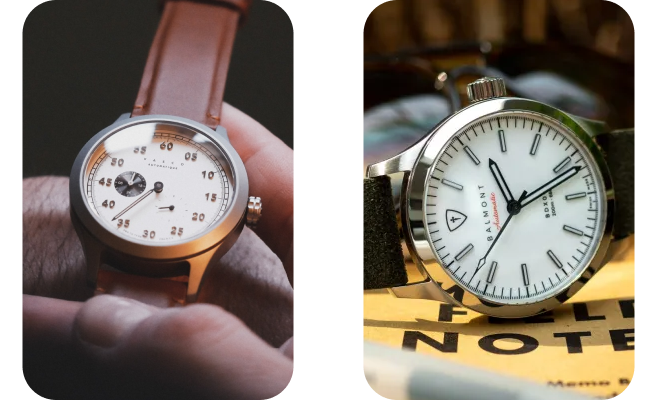
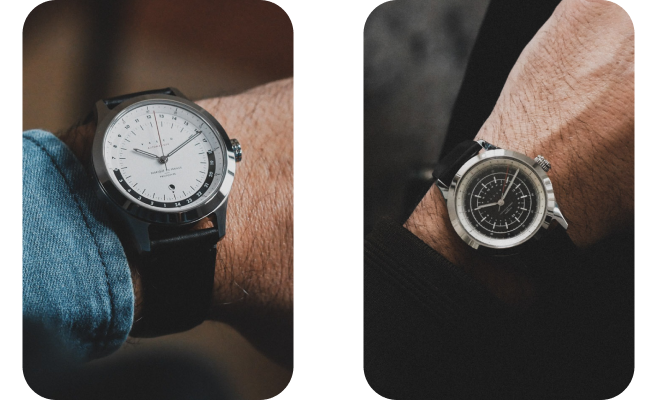
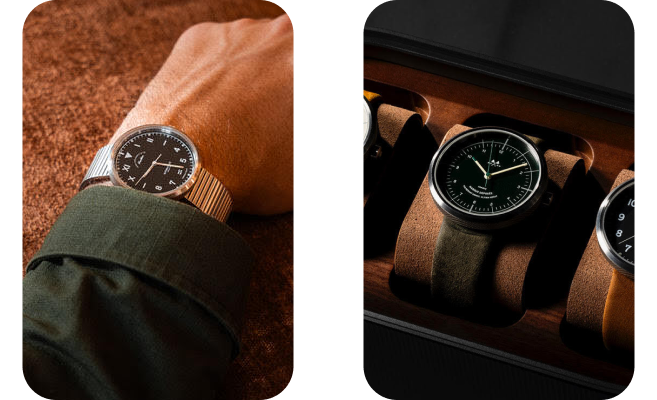
Learn to design luxury watches that make a statement.
Led by Revere Griffin, Associate Creative Director at Fossil, this 9-week intensive equips you to design, model, and pitch production-ready timepieces with industry-level precision.
THIS COURSE IS FOR YOU, IF...
-
YOU ARE AN INDUSTRIAL OR PRODUCT DESIGNER
You can design products, but watches play by different rules. This course teaches you to design from the movement outward, aligning proportion, brand language, and technical feasibility. You’ll graduate with a luxury-grade watch project that proves you understand horology at a professional level — positioning you as a specialist ready for high-end clients or in-house roles.
-
YOU ARE A JEWELRY DESIGNER OR CAD SPECIALIST
Beautiful form isn’t enough if it can’t function. Here, you’ll gain the mechanical understanding behind case construction, dial architecture, and movement constraints. You’ll turn your aesthetic and modeling strengths into fully feasible watch designs, expanding into a new category of functional luxury.
-
YOU ARE A FASHION DESIGNER OR MICROBRAND FOUNDER
Vision alone won’t get a watch into production. This watch design course builds your fluency in CAD workflows, materials strategy, rendering, and technical documentation. You’ll finish with a credible, production-aware watch concept and the ability to speak the language of manufacturers, partners, and investors.
Our students work in 1600+ companies worldwide

Across 7 assignments and 6 workshops, you’ll deconstruct brands, write a strategic brief, sketch variations, create orthographic renders, and complete production-ready CAD models. You’ll also tackle cost-reduction and material strategy exercises that mirror real industry trade-offs.
We analyze legendary models and strategic brand moves to understand what makes a watch timeless. You’ll study successful expansions, failed launches, and bracelet design thinking to see how design, business, and positioning connect. Guest speakers add current, market-level perspective.
Your Watch Design Pitch combines story, engineering, and market logic. You’ll present your concept evolution, exploded 3D architecture, materials strategy, spec sheet, and master renders in one cohesive deck. By the end, you won’t just show a beautiful design, you’ll show you understand the entire lifecycle.
- Associate Creative Director, Fossil
- Led men’s watch design at Fossil Group for 15+ years
- Directed collections from sketch to factory production
- Balanced creative direction with tooling and cost realities
- Developed global collaborations with Disney, Marvel, DC, Warner Bros., Mojang, and The Pokémon Company
- Principal designer on the Nick Jonas Ă— Fossil Machine Luxe collaboration
- Presented product strategy to VP-level leadership
- Mentored designers across the full design-to-launch process

Get to know your instructor, take a closer look at the course program, and get ready for the learning ahead.
- Instructor intro
- Course structure
- Assignments & final project overview
Get fluent in the language of watch design — from bezels and lugs to movements and margins — and start thinking like a designer who balances emotion, engineering, and brand reality. You won’t just look at a watch from now on — you’ll understand what’s driving every decision behind it.
- What are watches?
- Core components
- Movement overview: Quartz vs. mechanical vs. automatic + complications
- The designer’s role & responsibilities
- Workshop: Design constraint mapping
Understand why watches look the way they do — and how history, function, and brand DNA quietly dictate design. You’ll read a watch like a designer: spotting visual codes, decoding categories, and seeing where tradition can be respected or strategically broken.
- Design lineage
- Watch market segmentation: Core categories revisited
- Function, form, convention: How history drives design
- Brand DNA & design language
- Case Study: Deconstructing design language & analyzing a brand
Assignment #1: Deconstructing Brands
Understand the basic watch anatomy and identify a brand for the final project. Select 3 brands and break down category focus, visual signatures, key innovation, history, and brand attitude.
Get inside the watch and think like a designer from the movement up. You’ll learn how different calibers shape proportions, layouts, and feasibility — so you can choose the right mechanism first, not try to squeeze it in later.
- Heart of a watch
- Very short history of timekeeping
- Caliber basics & movement types
- Core constraints, ramifications, and feasibility
- Demo: Breaking down a supplier's spec sheet
Define what your brand stands for and what it refuses to be. Pin down your exact buyer, set clear design red lines, and build a sharp point of view that anchors every decision before ideation even begins.
- Brand as constraint, not decoration: Storytelling & guardrails
- Why people buy watches: Target consumer
- Case Study: One brand, three strategic moves
- Case Study: Brand failure & redemption
- How brands guide design: Risk, price, product category, time horizon
- Workshop: Brand → buyer → story
Assignment #2: Brand Deep Dive
Choose one brand and build out a design brief for the final project. Include brand summary, target user, design & emotional intent, mechanical direction, and category.
Drawing watches is hard. Learn the tools to communicate your ideas, not be bogged down with the pressure of sketching. Create fast, focused concepts, lock in strong proportions, and land on a clear, constraint-driven watch design.
- Frame sketching
- Purpose of the sketch: Ideating vs. selling
- Underlays, the secret weapon
- Scale & proportion: Common pitfalls
- Orthographic thinking & dial architecture
- Workshop: Sketching concepts
Rethink the bracelet as half the design, not an afterthought. Explore how straps and bracelets shape comfort, balance, and identity — so your watch concepts don’t just look good in a sketch, they make sense on the wrist.
- Reframing the bracelet
- Case Study: Genta’s Trilogy
- Bracelet vs. strap
- Connection points
- Basic ergonomics
- Iconic straps & bracelets
Assignment #3: Direction-Setting Concept Sketches
Prepare 3 concept sketches: explore attachments intentionally, include light shading, and outline the purpose by choosing a direction.
Learn how to build a precise, production-ready watch render in Illustrator — not as art, but as smart visual decision-making. Work from the center out, use symmetry and structure to remove ambiguity, and set up your file so you can recolor and iterate fast.
- Benefits of vector rendering: Illustrator
- Strong contrast moment
- Demo: Rendering a watch
- Detailed components
- Workshop: Fixing the file for recoloring
Force the design to survive from every angle, lock proportions, and make it 3D-ready. Turn sketches into precise orthographic drawings, make smart dimension decisions, and solve the side-view problems that separate cool concepts from wearable, buildable watches.
- Orthographics, dimensions & avoiding the ambiguity
- Orthographic views
- Dimensions as design drivers
- Demo: Building an accurate sideview from a movement spec
- What orthographic drawings reveal
- Transition to 3D: Exporting files as a starting point
Assignment #4: 2D Orthographic Render
Create a full color, illustrative 2D orthographic render of your product. Refine the sketch, relate back to the brief, set measurements and numbers behind. Do the linework and side view using Illustrator. Include a basic dimensional page for CAD.
Learn how to translate a locked 2D design into a clean, editable 3D case model that respects design intent while staying manufacturable. You’ll focus on proportions, structure, and smart driving dimensions — building it without getting lost in tiny engineering details.
- From 2D control to 3D reality: Importing 2D drawings into CAD
- Design intent vs. engineering detail
- Case construction fundamentals
- Dimensional drivers & best CAD practices
- Demo: 3D file run through using Solidworks History feature
- Lab: Case block out
Lock in your watch’s material story — from case metals to crystal, finish to strap — and finish direction for your watch that aligns with brand, price point, and narrative, setting you up for rendering next week.
- Materials as storytelling
- Case materials: Core metals, modern, budget
- Crystal materials: Function & perception
- Case finishing: Outlook, tone, use
- Dial finishes, straps & supporting material
- Workshop: Locking in the voice of your watch
Assignment #5: 3D Geometry Completion
Finalize your core 3D geometry. Focus on clean geometry with correct proportions and prepare for rendering.
Bring your design to life. From CAD handoff to hero shots, render every material, surface, and angle with clarity and style, so your visuals tell the story of your design and brand at a glance.
- From CAD to KeyShot: Clean handoff
- Render environment set up
- Surface finishing fundamentals
- Camera angles that work for watches
- Lab: Rendering a component
- Elevating renders: Advanced KeyShot tips
Learn how to clearly document and communicate your watch design so it can be accurately developed, manufactured, and evaluated by professionals.
- Why spec sheets matter
- What belongs in a spec sheet
- Dimensioning: What factories look for
- Materials & finishing: Best practices & common pitfalls
- How this fits in a portfolio
- Demo: Walkthrough a spec sheet template
Assignment #6: 3D Geometry Views Render
Finish the work from previous weeks that needs to be expanded. Create rendered views: front view, Âľ view, side view, end view, one detailed view. Complete spec pages, including materials and finishing, color, case & dial dimensions.
Present yourself with expert advice. Learn how to package your final watch project into a clear, compelling story that demonstrates design thinking, technical competence, and professional readiness.
- What hiring managers look for
- Final project expectations
- Structuring the pitch: Story → problem → solution
- Visual storytelling & sequencing
- Handling critique like a professional
- Career pathways: Where your project can go
Understand how trends emerge, how brands respond to them, and how designers innovate without losing credibility. Get the industry know-how to position your final project thoughtfully in the current market.
- Trends: Signals, not instructions
- Current macro-trends in watches
- Innovation vs. novelty
- Reissues & archival design
- Lifecycle of a watch line
- Applying trends to your final project
[Optional] Assignment #7: Project Story & Concept Hook
Outline the final project format, figure out the story, and the big hook of the concept. Use it as an opportunity for feedback.
Let’s demystify the real product development process. Learn how watches get made inside organizations and how to operate like a professional inside a cross-functional team. The instructor will share his personal “war stories”.
- The big picture: Corporate ecosystem
- Demo: Problem-solving with product development
- Workshop: Common problems & solutions
- Communicating with non-design stakeholders
- Taking briefs & managing revisions
- Career access & professional behavior
Congrats on completing the program! Let’s celebrate and finish strong as watch designers — with a real-world design review simulation.
- Final project presentation & pitch
- Instructor & peer feedback
- Final Q&A
- Micro-awards ceremony
Course Project: Watch Design Pitch
Prepare a slide deck compiled from all your prior assignments, including your brand logic, visual evolution, technical architecture, production specs, and high-fidelity visualization.
What our students say
"I really enjoy the format of the course. Lectures with real life examples and an ongoing case study. Also built in 20 minutes at the end of each class for questions is helpful."
"Overall I'm impressed with the level of detail and explanation around particular topics and subjects. There's a real depth to each module which for learning allows the information to stay in your brain."

"The group activities, they allow us to interact and exchange ideas, plus the way it is structured is challenging and mind twisting as we collaborate in different parts of the ideation."
"I enjoyed the structure of the class. I like how we learned about a topic and practiced it in the workshops. It’s helped me to apply what I learned!"