- MAIN PAGE
- – elvtr magazine – Gen Z & Millennials at the Career Crossroads
Gen Z & Millennials at the Career Crossroads

Most of us choose a career before we’ve figured out who we are and what we really want to do. We spend tens of thousands on education, fire off countless applications, and accept the first offer that lands in our inbox. After a few years, quitting feels like too much of a backward step, so we settle instead. However, with dissatisfaction sapping confidence and limiting success, accepting unfulfillment will cost you.
ELVTR surveyed 2,000 Gen Z and Millennial workers across the U.S., exploring satisfaction, performance, and what separates employees thriving in their roles from those merely getting by.
Key takeaways:
- 33% of Gen Z and 37% of Millennials say they’re not satisfied with their current job. Education and fitness show the highest dissatisfaction, while technology and healthcare lead in employee satisfaction — signaling where talent feels valued and where burnout dominates.
- Flexibility beats pay as the top driver of job satisfaction. 58% say flexibility is the most important factor in workplace happiness, ahead of salary (48%) and a supportive team (47%).
- Confidence separates career climbers from career stallers. 37% of satisfied employees apply for roles they’re underqualified for — nearly double the 19% of dissatisfied employees.
- Millennials are deep in a mid-career identity crisis. More than half (55%) feel unsettled or still figuring out their careers.
- 25% of Millennials are actively planning a career pivot, and 59% admit they’ve hoped for an external excuse — like a layoff — to finally leave a job they feel stuck in.
- Dream careers expose generational differences in purpose. Millennials lean toward tangible impact: 11% dream of helping professions, and 7% dream of working with animals — a distinctly Millennial aspiration. Gen Z, by contrast, favors creative and flexible careers, prioritizing self-expression over hands-on service.
The Satisfaction Gap: Who’s Thriving and Who’s Just Tolerating Work
Roughly a third of Gen Z and Millennials say their job is bad or just tolerable. If Monday mornings feel like a trap, tech is probably the safest bet. With competitive salaries, flexibility, and clear progression, 19% of young workers say they’re happy in the field. Healthcare and pharma also score well (14%), showing that helping people matters… but so does money.
On the flip side, industries like education, fitness, and finance consistently rank among the least satisfying — high stress, low pay, and burnout are standard.
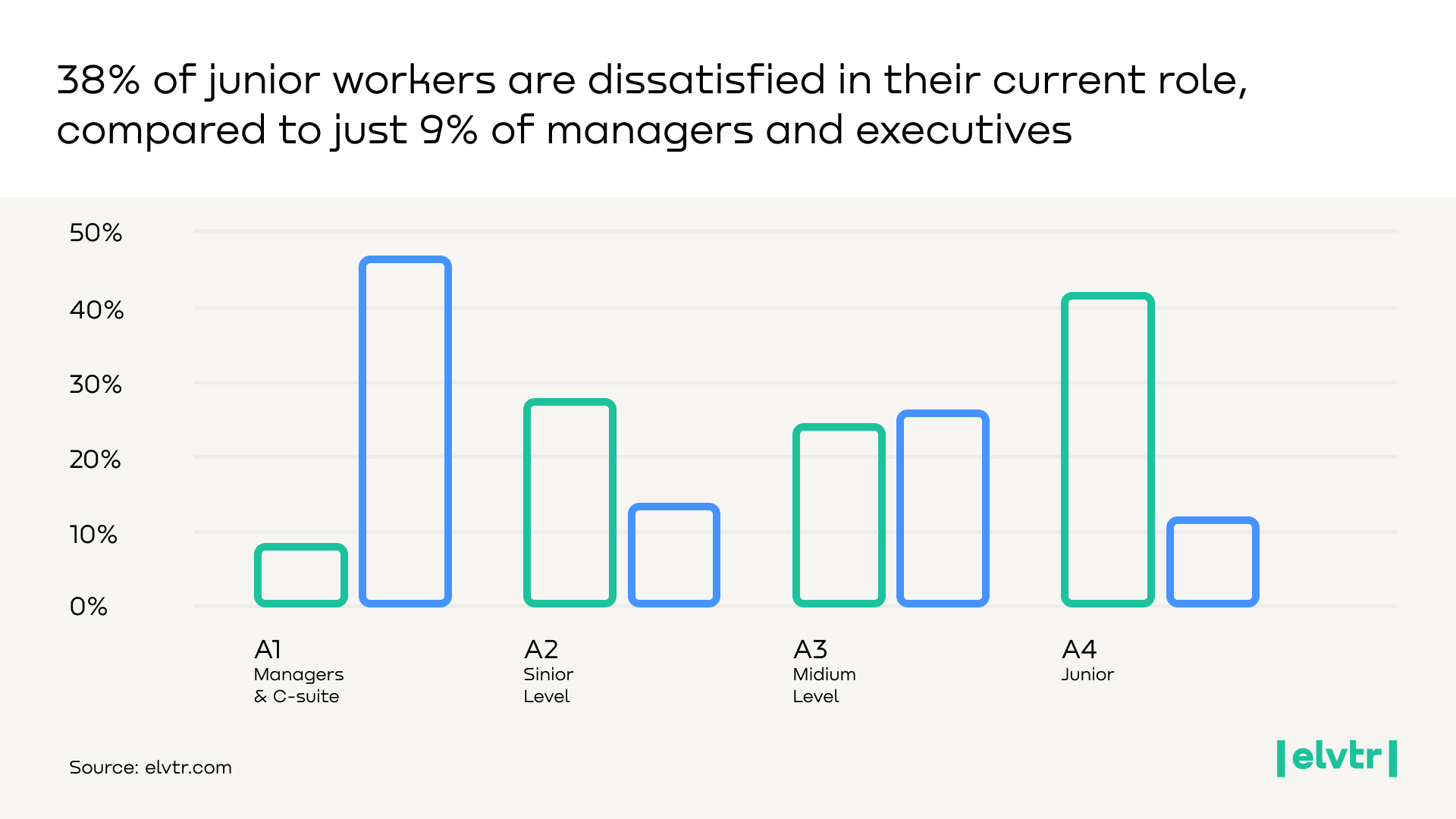
The secret to career happiness? A corner office with a nice view and a PA to fetch your lunch. While 38% of junior employees long for more, job satisfaction comes with seniority, with 46% of managers and executives insisting they’re happy in their roles.
The perks and skills that deliver the highest ROI
High wages, regular bonuses, and a solid 401(k) are nice, but they’re not everything. It turns out, it’s not about the corner office or fancy perks. Flexibility tops the list for both Gen Z and Millennials (58%), followed by salary (48%) and a supportive team (47%). Young workers want a life outside work, with room to breathe. Other motivators include:
- Making an impact – 45%
- Meaningful challenges – 36%
- Low stress – 29%
Company culture is a leading reason for employee dissatisfaction. Some 38% of unhappy young workers blame leadership that expects too much, pays too little, and promotes burnout over work-life balance.
How confidence increases your value (and doubt holds you back)
Fortune favors the bold – and so does the career ladder.
37% of satisfied employees apply for roles they’re underqualified for, nearly double the 19% of dissatisfied employees.
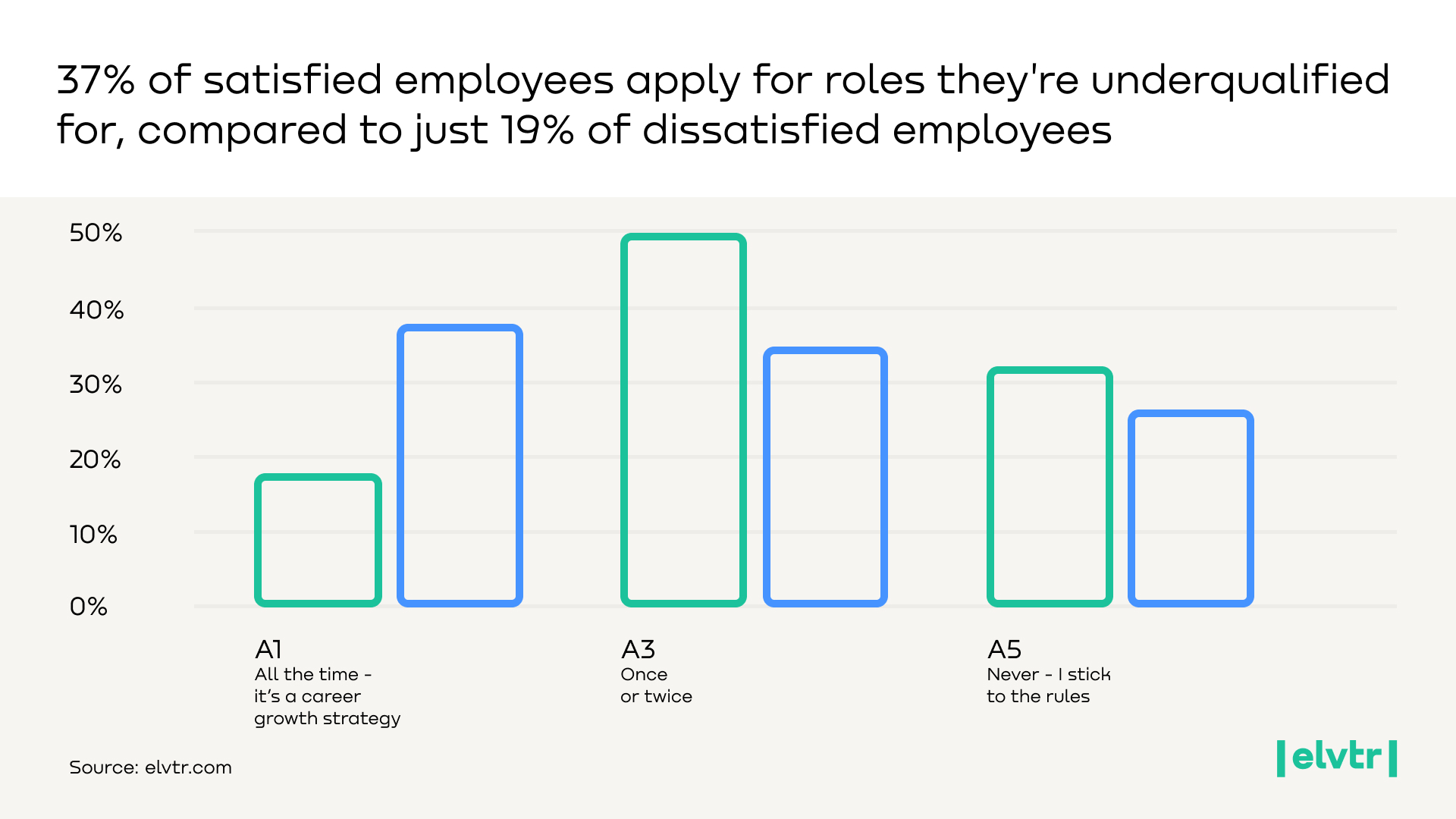
The challenging part is getting hired without ticking every box. Once you’re in, online courses and YouTube tutorials can fill the knowledge gaps. Roughly one in three workers in both groups say they’ve succeeded despite being underqualified.
The struggles that come with hating your job
The louder your dissatisfaction, the quieter you become. Some 72% of unhappy workers believe being honest in the workplace could harm their career, compared to just 35% of happy workers.
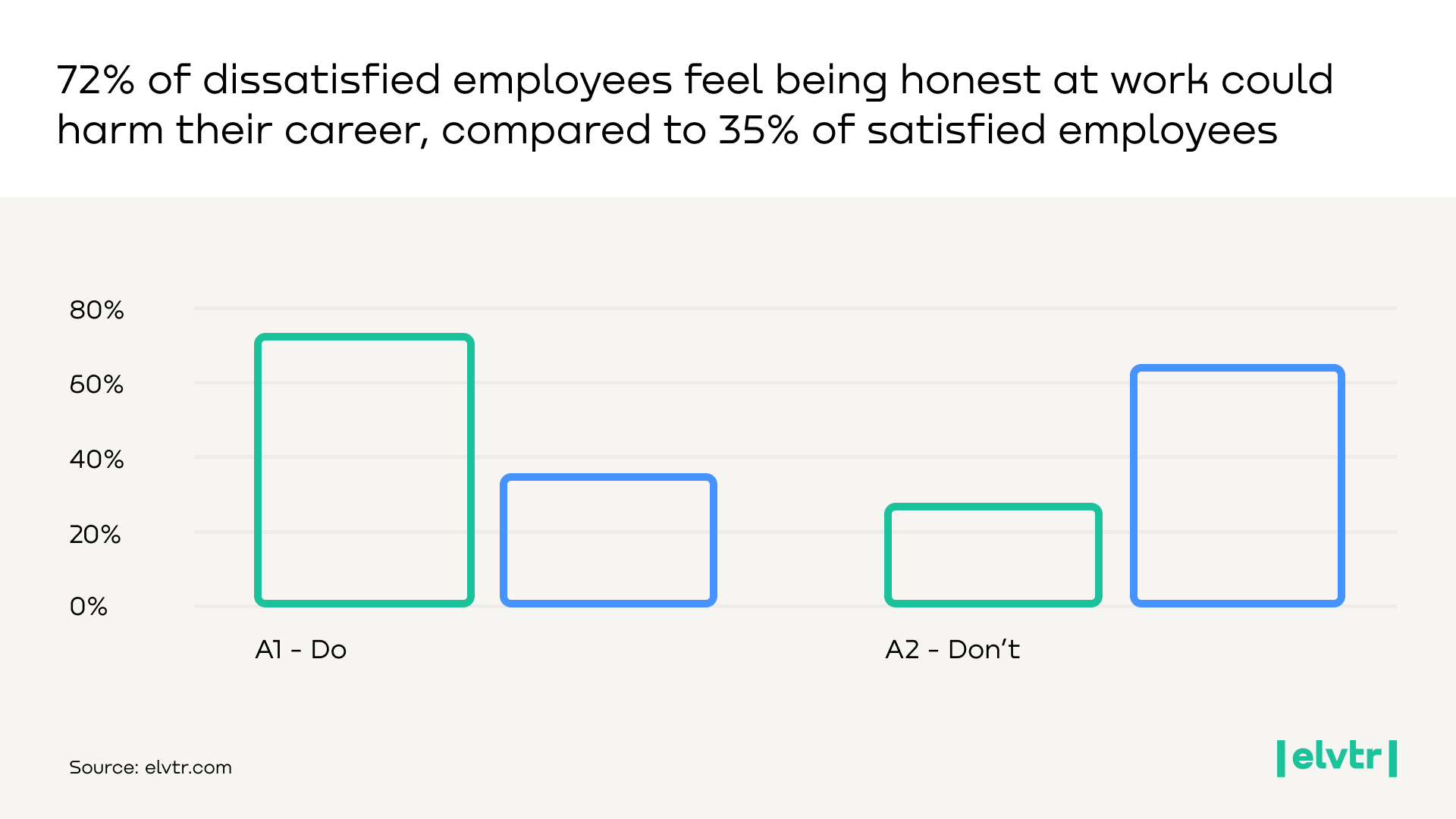
Dishonesty follows them into interviews:
- 34% dodge interview questions about why they’re leaving their job
- 22% hide their weaknesses
- 19% lie when asked, “Why do you want to work for our company?”
Salary negotiations suffer too. Dissatisfied employees are more likely to let employers name their price, dodge salary questions, and lowball themselves
There’s a confidence gap, and it shows during contract negotiations. Some 19% of unhappy employees sidestep salary questions, compared to just 3% of satisfied workers. Likewise, a further 25% let the employer set the number, and 3% lowball themselves to stay in the running.
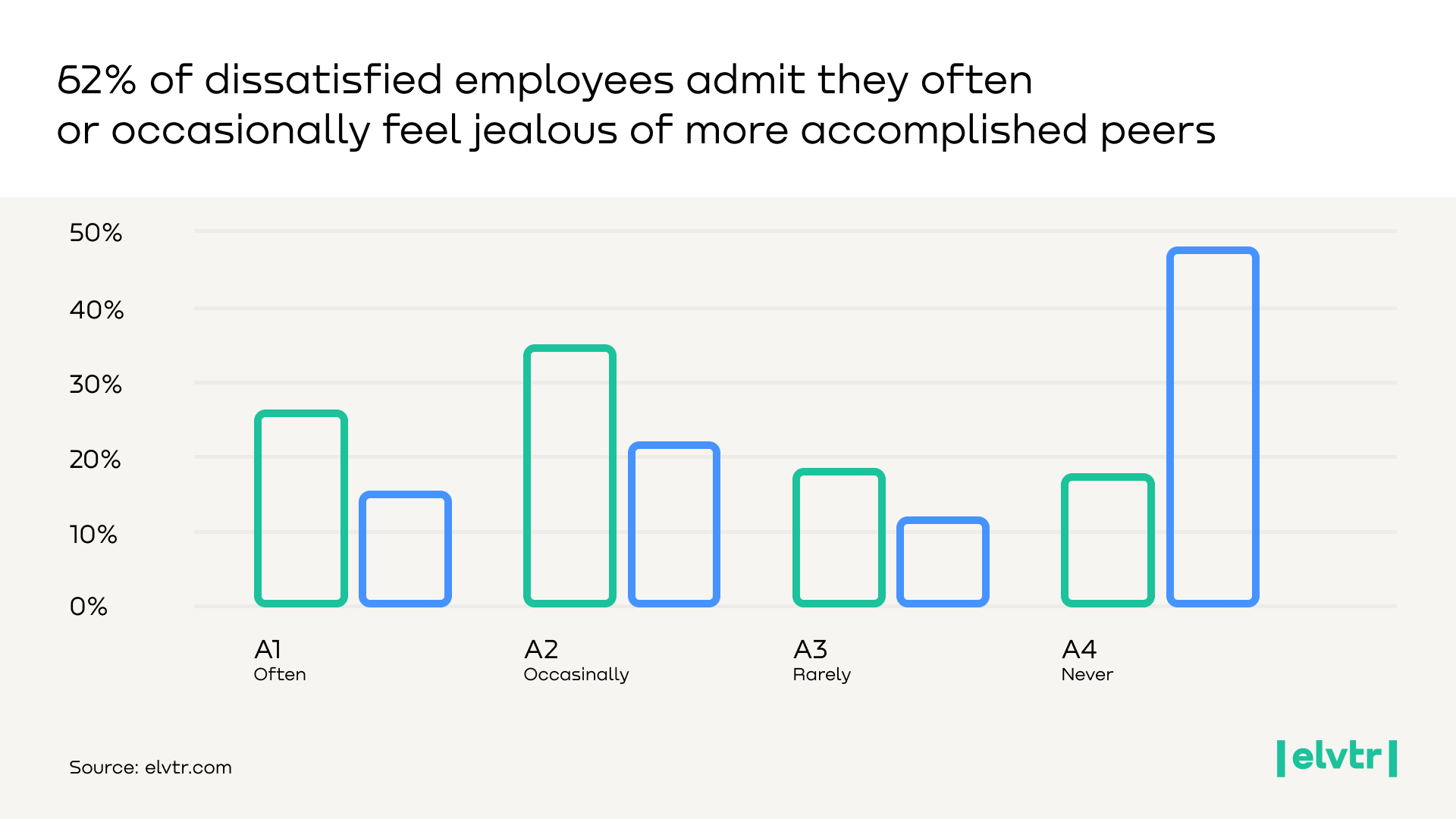
When you’re unhappy at work, comparing yourself becomes a full-time distraction. Some 62% of dissatisfied employees admit they’ve felt jealous of a colleague’s progression, wasting energy better spent building skills and pursuing growth.
For 78% of dissatisfied young workers, a pink slip would feel like a bonus in disguise – giving them permission to reassess their career and pursue a more fulfilling path.
Why dissatisfaction doesn’t always lead to resignation
Money is the main barrier to pursuing change for both satisfied (49%) and dissatisfied (44%) workers. The job may not be perfect, but it pays the bill.
Fear is the second major obstacle: dissatisfied workers fear judgment (31%) and starting over (28%), while satisfied workers cite a fear of failure (24%).
When pay is taken out of the equation, 50% of dissatisfied workers would pursue a more meaningful career, and 34% would switch to a creative field. But young workers don’t have to choose between money and meaning – there are roles out there that pay well and will feed your sense of purpose.
The fear of never finding fulfilment
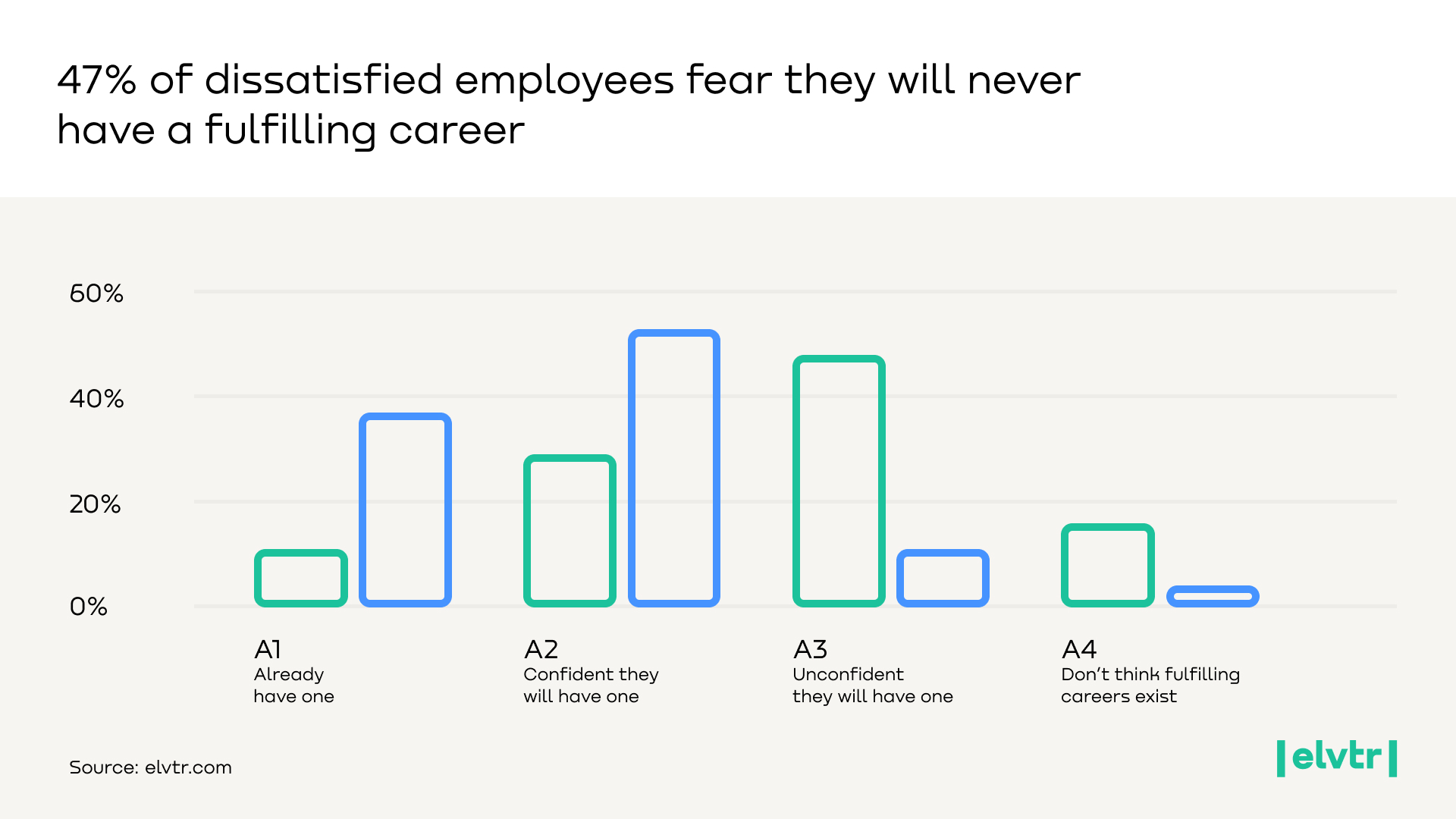
Dissatisfaction is slowly turning into resignation – but unhappy workers are settling, not quitting. Some 47% feel it’s too late to find fulfilling work, and 16% believe fulfilling careers don’t exist.
In contrast, satisfied employees are far more optimistic: 37% are already in their dream job, and 52% are confident they’ll get there.


Midlife Career Crisis: A Generation Waiting for Permission to Quit
Millennials (born roughly 1981-1996) were told there would be a moment when things would click. Work hard. Build skills. Say yes to the right opportunities. Somewhere along the way — by your mid-30s — clarity would arrive. But for a generation that now makes up the largest share of the U.S. workforce, that moment hasn’t come.
More than half of Millennials (55%) report feeling unsettled or still figuring out their careers, and only 18% say they already have a fulfilling one. This isn’t early-20s confusion. These are adults who are expected to be at the peak of their careers by now.
While a third of the generation feels it may already be too late or that fulfilling careers might not exist at all, nearly half (49%) believe they’ll eventually find one. For many, though, that belief comes with a complete change of their path.
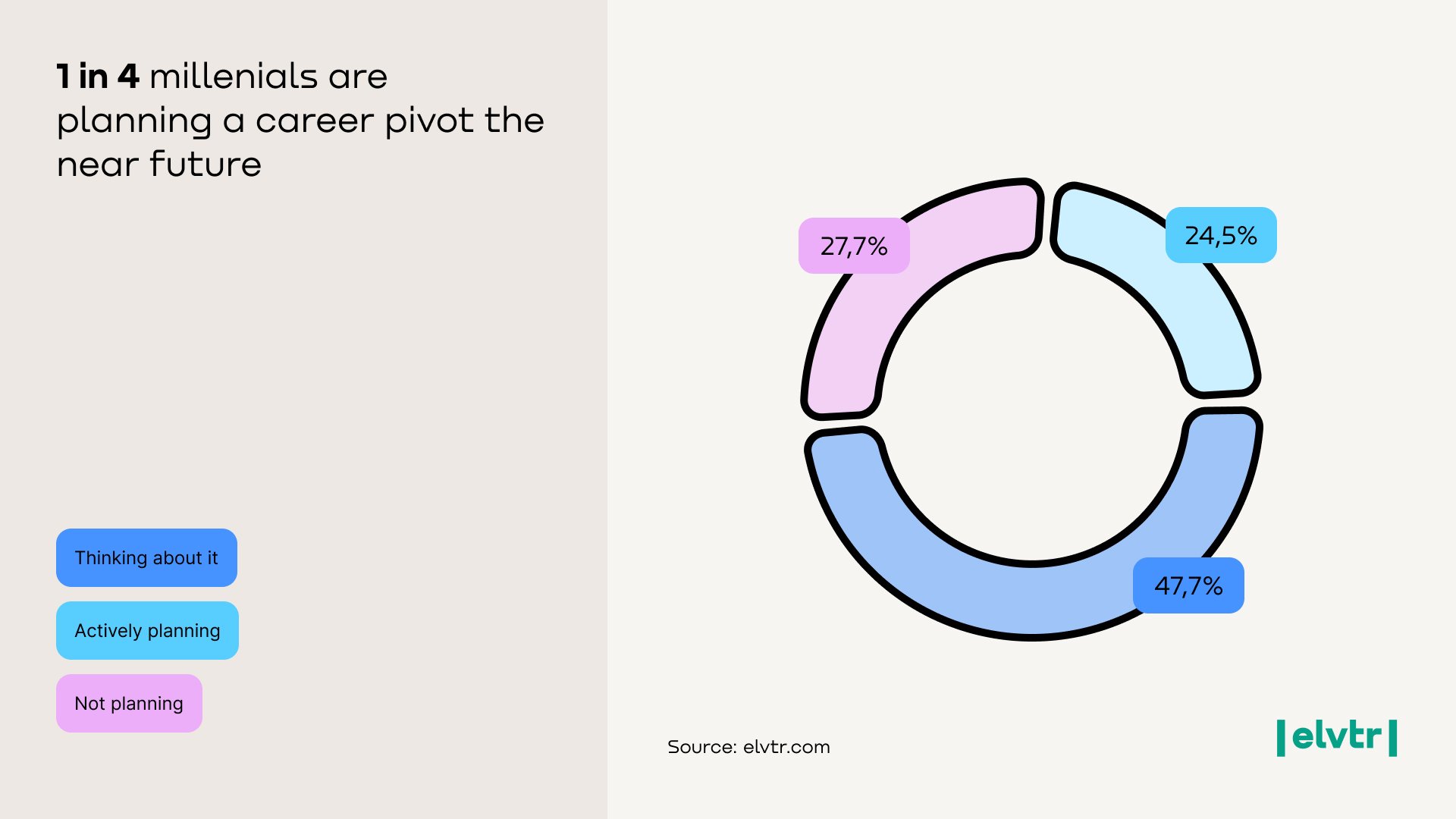
One in four (25%) Millennials are actively planning a full career pivot in the near future, and another 48% are thinking about it. It signals that the traditional promise of “progression” hasn’t delivered stability or satisfaction for most of them. The ladder worked — titles, experience, responsibilities — but the outcome didn’t.
The real barrier isn’t fear — it’s financial gravity
The biggest obstacle to change is financial security (48%). Other significant barriers include fear of starting over at their age (29%) and risk of failure (28%). Lack of skills or qualifications also holds 27% of Millennials back, while family expectations affect 25%, and uncertainty about what they really want impacts 22%. Smaller hurdles include fear of judgment (17%) and lack of motivation (13%).
Here’s the number that exposes the emotional core of this moment: 59% of Millennials admit they’ve secretly hoped for an external reason — like a layoff — to leave their job.
Not a promotion. Not a sabbatical. Not a recruiter call. A layoff. People who want change but feel they need circumstances to trigger it.
The drive for purpose
Their fears are understandable — they have more to lose than they did at 25, and far fewer safety nets than they were promised.
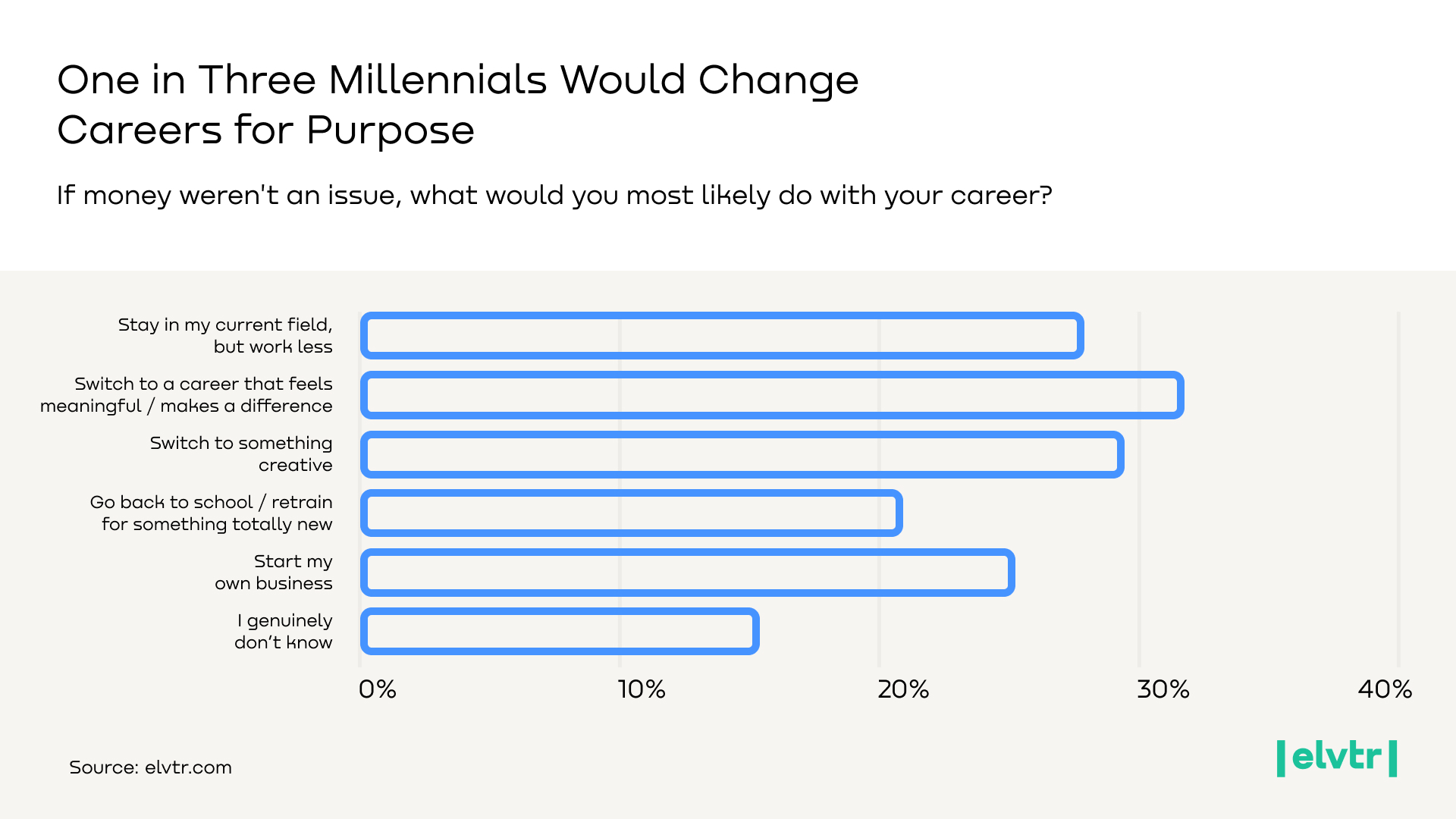
But what if money is removed from the equation? Faced with a world where financial pressure didn’t dictate their choices, Millennials gravitate toward meaning and creativity:
- 32% would switch to work that feels meaningful or makes a difference
- 30% would pursue something creative
- 26% would start their own business
- 21% would retrain for something entirely new
What we’re seeing isn’t a generation that doesn’t want to work. It’s a generation stuck between responsibility and reinvention, waiting for something to justify change. The Millennial career crisis isn’t loud. It doesn’t look like mass resignations or dramatic exits. It looks like a quiet hope for disruption, like they’re asking, ‘Am I allowed to want something else?’
Millennials vs. Gen Z: Dream Careers Reveal Generational Tendencies
We asked Millennials and Gen Z about their dream careers, and the answers reveal not just preferences, but generational values, priorities, and how each cohort imagines work fitting into life.
Creativity is exploding for Gen Z
While 25% of Millennials would choose careers in art and entertainment — focusing on fine arts, comedy, and gaming — 39% of Gen Z are drawn to creative careers: 17% as artists, 9% as content creators, 7% as musicians, and 6% as writers. The younger generation’s interest in creative work is broader and more digitally-infused, reflecting their upbringing fully immersed in social media, online platforms, and self-expression. A particularly quirky dream career among Gen Z is astrologer, hinting at a willingness to blend personal passion with unconventional niches.
Sports and travel are consistently appealing
Both generations show similar interest in sports (11–12%) and travel (10–11%), suggesting that leisure, competition, and exploration remain core career fantasies. These choices indicate a shared value for active, engaging lifestyles, though Gen Z is more likely to combine these with content creation or entrepreneurial ventures.
Helping professions are more appealing to Millennials
11% of Millennials dream of careers in helping professions — counseling, healthcare, and social work — compared to 6% of Gen Z. This could reflect Millennials’ desire for tangible impact and emotional grounding, whereas Gen Z is more drawn to flexible, lifestyle-integrated work.
Business aspirations show different flavors
About 10% of both cohorts want business-oriented careers, but the type differs. Millennials often choose practical ventures like reselling cars, flipping houses, or other service-oriented businesses, while Gen Z gravitates toward romanticized or boutique entrepreneurship, like bookshops, hobby stores, or small creative ventures. This signals a generational shift: Millennials pursue business as a means to financial independence, Gen Z pursues it as a way to craft identity and lifestyle.
Nature and environment careers diverge slightly
Millennials’ interest in nature (11%) leans toward working with animals (7%), showing a desire for hands-on care and emotional connection. Gen Z’s 9% interest in nature is more recreational — gardening, fishing, or outdoor projects — reflecting a preference for experience-based, flexible work rather than responsibility-centered care.
Millennials cling to traditional “technical” careers
Careers in tech/digital (6%) and aviation and engineering (4%) appear among Millennials but are virtually absent in Gen Z’s dreams. Millennials retain a connection to practical, structured, and skill-based paths, while Gen Z increasingly values creativity, flexibility, and self-expression over conventional technical careers.
From board game design to sport psychology, theatre production to comic book writing, there’s a fulfilling career out there for everyone. Some young workers get lucky and land in their dream profession early, while others have to work a little harder to find it.