- MAIN PAGE
- – elvtr magazine – Holiday Reunion or Interrogation?
Holiday Reunion or Interrogation?

Dataset Overview
- Sample Size & Audience: The survey includes 2000 respondents (U.S. adults ages 21–35) collected via Pollfish. The sample is balanced by gender and spans diverse backgrounds.
- Key Demographics: Ethnicity: 57% White, 22% Black, 11% Hispanic, 5% Asian, others 5%. Immigration: 12% second-generation Americans (at least one immigrant parent) and 4% first-generation (self-immigrated), with ~82% third-generation (parents born in the U.S.).
- Family Context: Respondents’ close families typically gather either 2–3 times (42%) or once (25%) over the winter holidays, though 6% do not gather at all. Gatherings range in size: 36% involve 5–8 people, 31% 9 or more people, 18% only 2–4 people, and 4% spend holidays alone. This context informs how family interactions might influence career conversations.
Widespread Career “Fibs” to Family
58% of young professionals have misrepresented their job in some way to their family, whether by exaggerating or downplaying details. Only 42% report being completely candid. Men and women are equally prone to these career fibs (approximately 60% of men vs. 56% of women), indicating this behavior transcends gender. Common tactics include avoiding the topic of work and telling small “white lies” about their job.
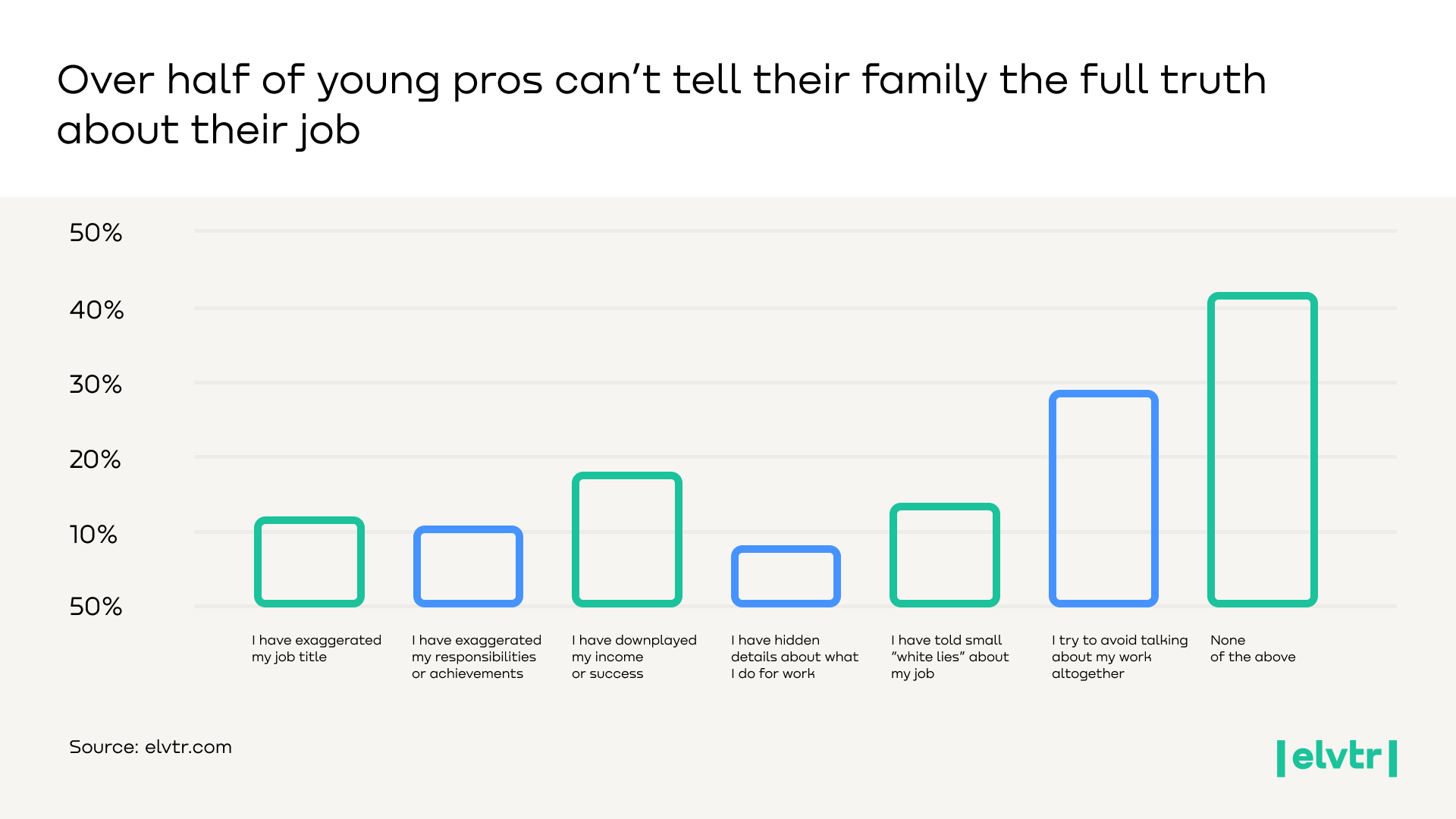
Men exaggerate achievements; women downplay success: There are gendered nuances in how people misrepresent their careers. Men were roughly twice as likely as women to embellish their job title or responsibilities when talking to family. In contrast, women were more inclined to downplay their income or success to avoid standing out. For example, if a promotion or raise occurred, some women reported understating their accomplishments around relatives, whereas men more often admitted to inflating theirs.
Youth Feel More Holiday Job Stress
Younger respondents in their 20s are significantly more likely to feel stress about upcoming holiday gatherings due to job talk (42% feel at least somewhat stressed) than those in their 30s (29%). Overall, 35% of respondents report feeling “very” or “somewhat” stressed anticipating family comments about their career. This highlights a generational confidence gap, as older millennials appear more desensitized to family scrutiny than Gen Z adults.
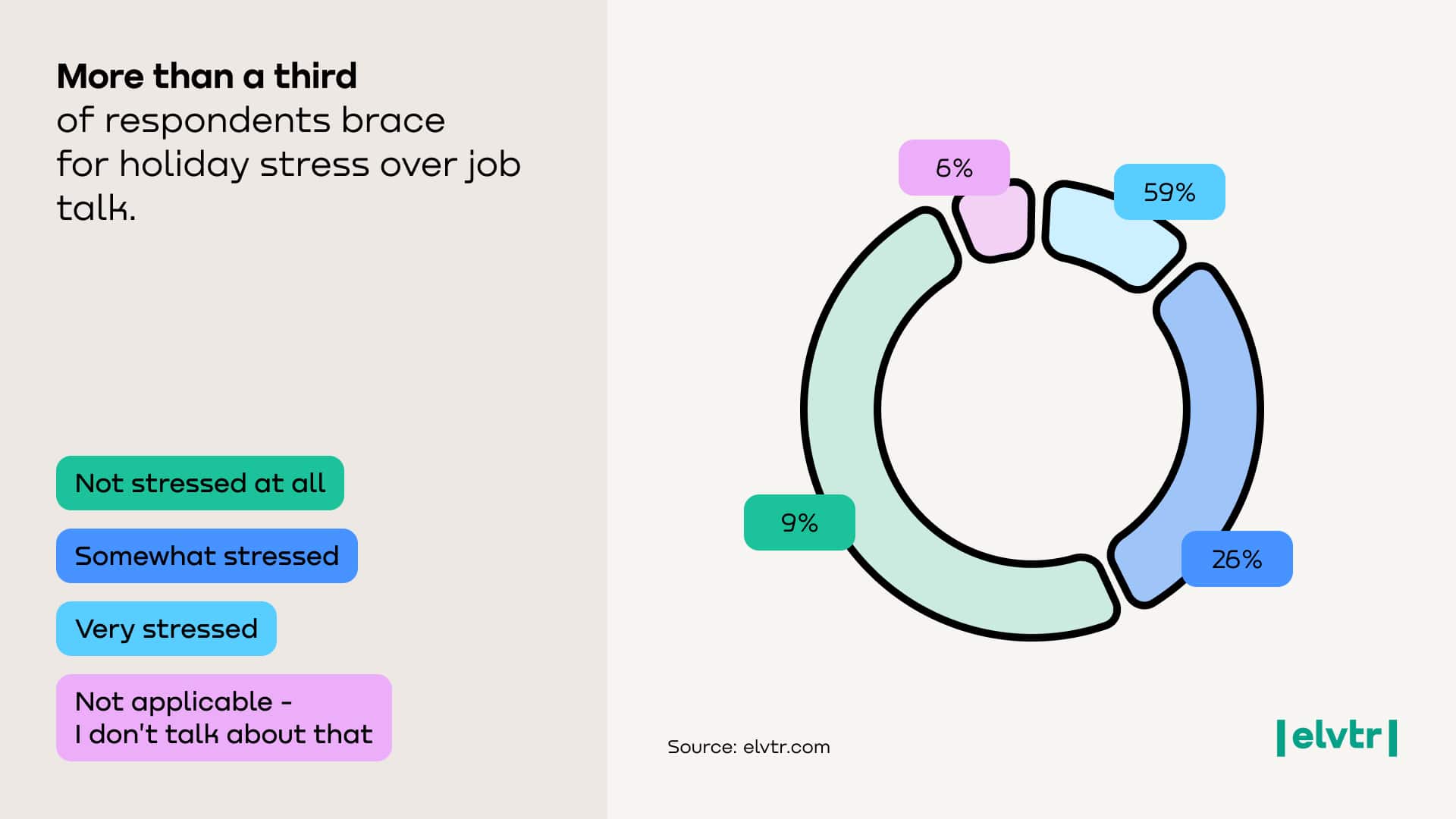
Career talk stress varies by family contact frequency. Family interaction patterns correlate with stress levels. Paradoxically, respondents who rarely see their family (once a year) tended to report higher stress about discussing work during that single meetup (many describing it as a high-stakes “annual evaluation”). Those who meet family often (multiple times over the holidays) reported lower stress on average, possibly because career updates become routine (or parceled out in smaller doses). For instance, 44% of the “once-a-year” group said they feel anxious or stressed about holiday career talk, compared to around 25% of the most-frequently-meeting group (4+ gatherings) – a directional difference given the smaller subgroup sizes. Regular contact may normalize work discussions, reducing the build-up of anxiety.


Men Face More Career Pressures from Family
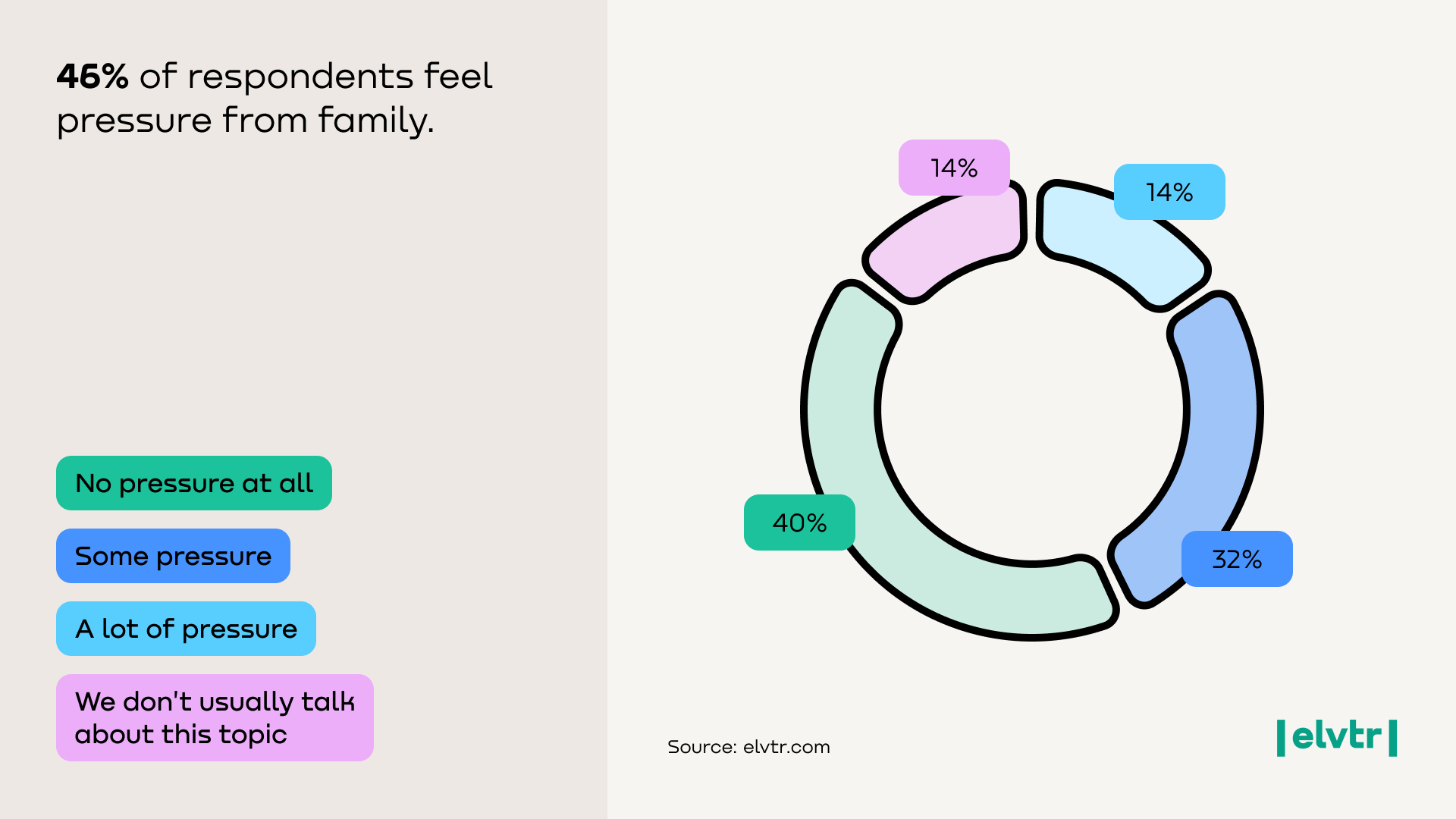
Male respondents report family putting “some or a lot” of pressure on them about their career more often than females do (approx. 36% vs 26%). Qualitatively, men mentioned feeling expected to have a high-paying or prestigious job to satisfy family expectations. In contrast, women were slightly less likely to get such direct career pressure at gatherings – possibly reflecting differing family expectations (or pressure on women manifesting in other topics). Notably, about 54% of all respondents said their family applies no career pressure at all during holidays (or avoids the topic entirely).
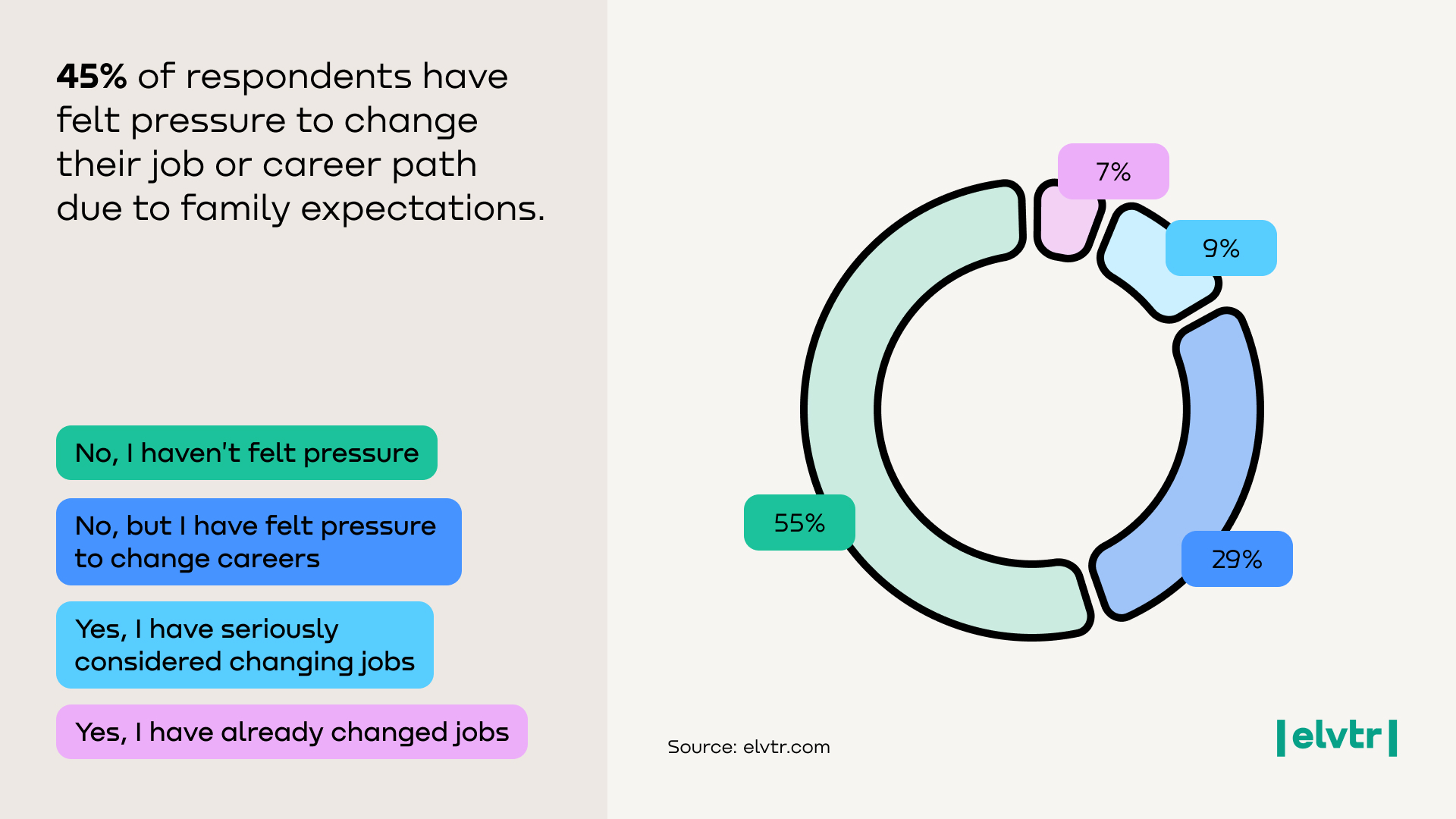
Nearly Half Have Felt Pressure to Change Careers
Family influence runs deep – 45% of respondents have felt pressured to change their job or career path due to family expectations. This figure includes 16% who went so far as to change jobs (7%) or seriously consider changing (9%) because of family opinions. The remaining 29% felt familial pressure to switch careers (although they ultimately did not), while 55% insist they’ve “never felt pressure” to change paths. Directional note: Respondents with at least one immigrant parent seem even more susceptible, with about 51% of second-generation Americans feeling pressure to alter their career vs. ~33% of those from non-immigrant families.
Family Approval Still Matters – Especially for Children of Immigrants
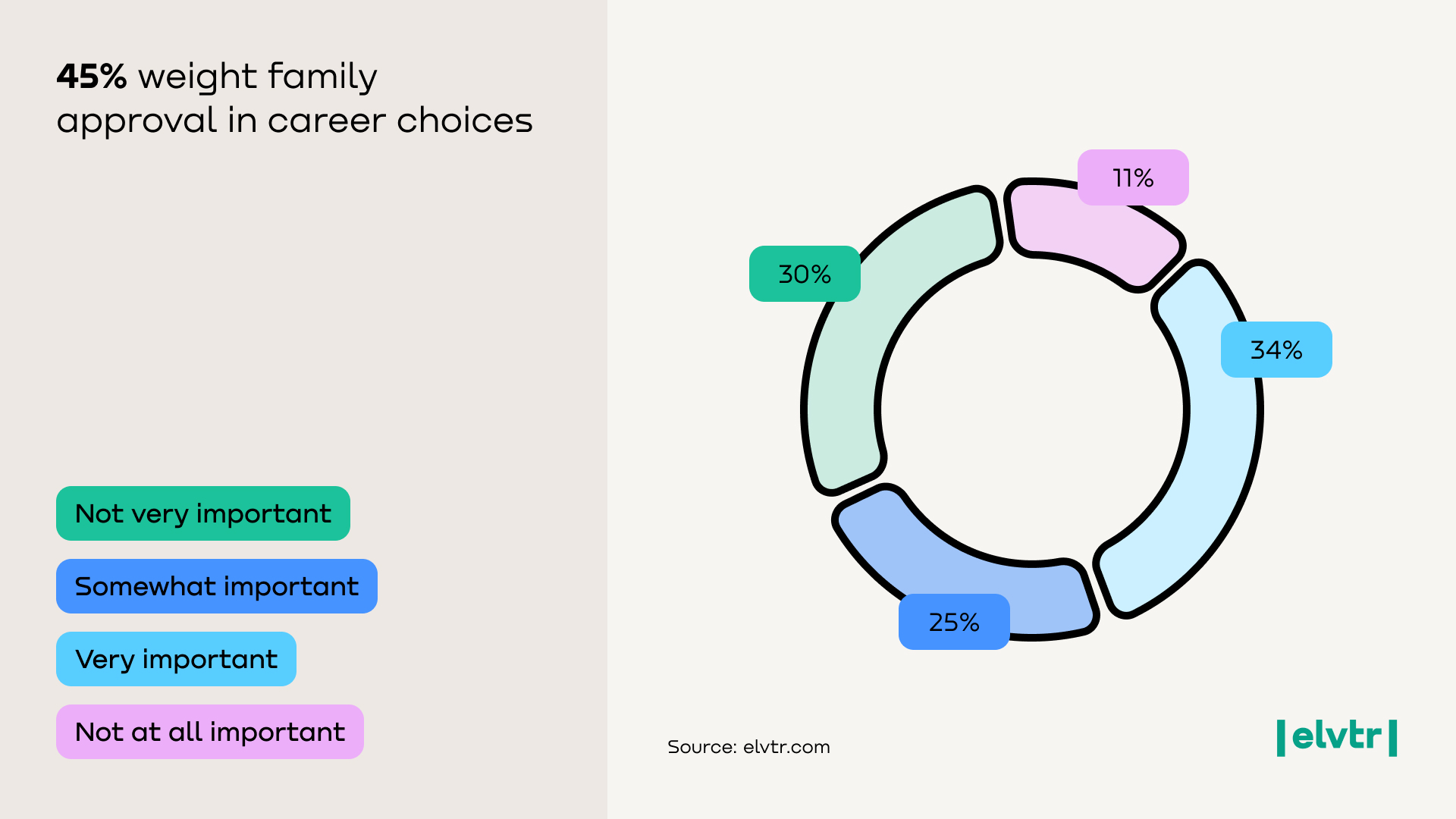
45% of respondents say their family’s approval is important when making career decisions (11% “very” and 34% “somewhat” important). Meanwhile, a slight majority (55%) assert that family opinion is “not very or not at all” important to their career choices. This balance shifts with cultural background: Second-generation Americans (at least one parent born abroad) lean more toward valuing family input (~61% rated approval somewhat/very important) than peers whose parents were born in the U.S. (~44%). This suggests that those from immigrant families may place more weight on parental expectations in career matters.
“I Can’t Make It, Sorry” – Skipping Family Events to Avoid Job Talk
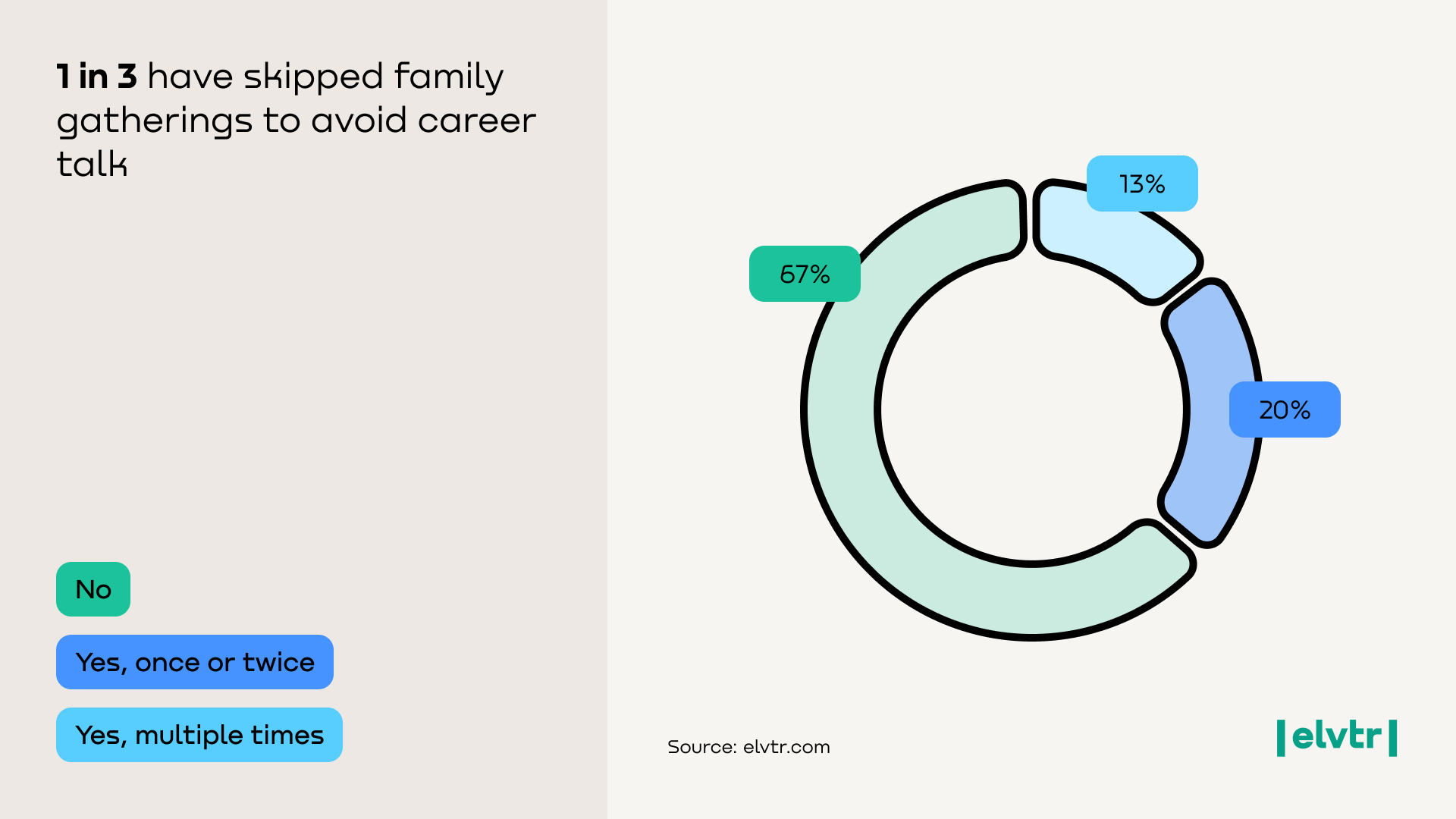
One in three respondents (33%) have avoided family gatherings at least once to dodge uncomfortable discussions about their career. In fact, 13% admit to doing this multiple times. This avoidance behavior is more prevalent among those feeling higher family scrutiny. Notably, second-generation Americans were directionally more likely to skip holiday events due to job concerns (about 41% have done so) compared to those from non-immigrant families (32%). This again underscores the intense pressure some immigrant parents may inadvertently place on career choices. (Overall, 67% of respondents say they’ve never skipped a family event for this reason.)
Large Extended Families Fuel Comparisons
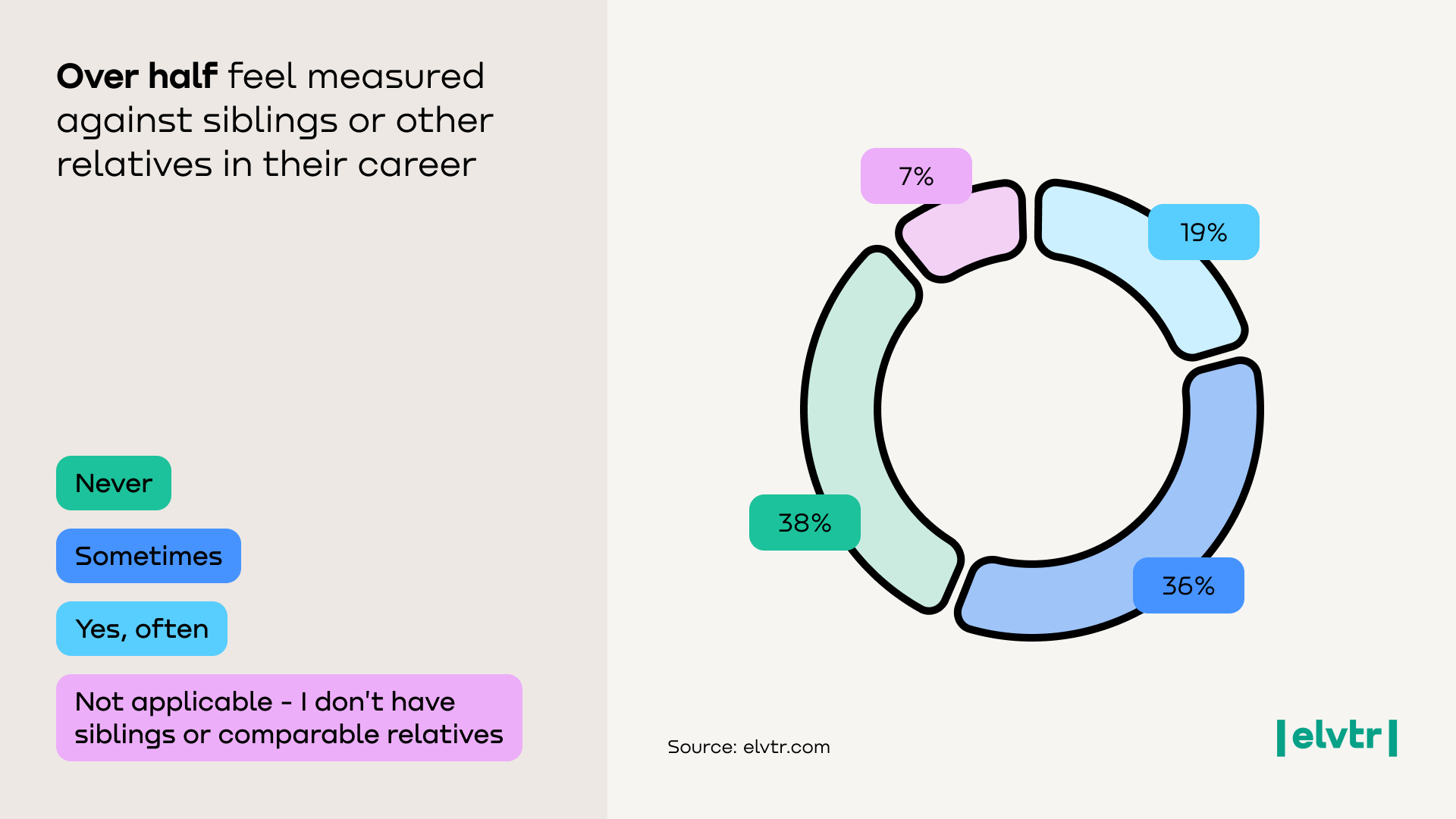
Feeling compared to siblings or cousins is a common experience: 55% report that their family at least “sometimes” compares relatives’ career success, including 19% who say it happens frequently. Only 38% never feel compared, while 7% are only children or have no comparable relatives. The tendency to compare achievements is amplified in bigger family gatherings – those with large extended-family holiday parties (9+ people) were considerably more likely to feel frequent career comparisons than those with only immediate family present (directionally, ~70% vs ~45% feeling at least occasional comparisons). With more relatives in the room (siblings, cousins, etc.), the “Who’s doing better?” dynamic intensifies.
Dream Job or Family Approval?
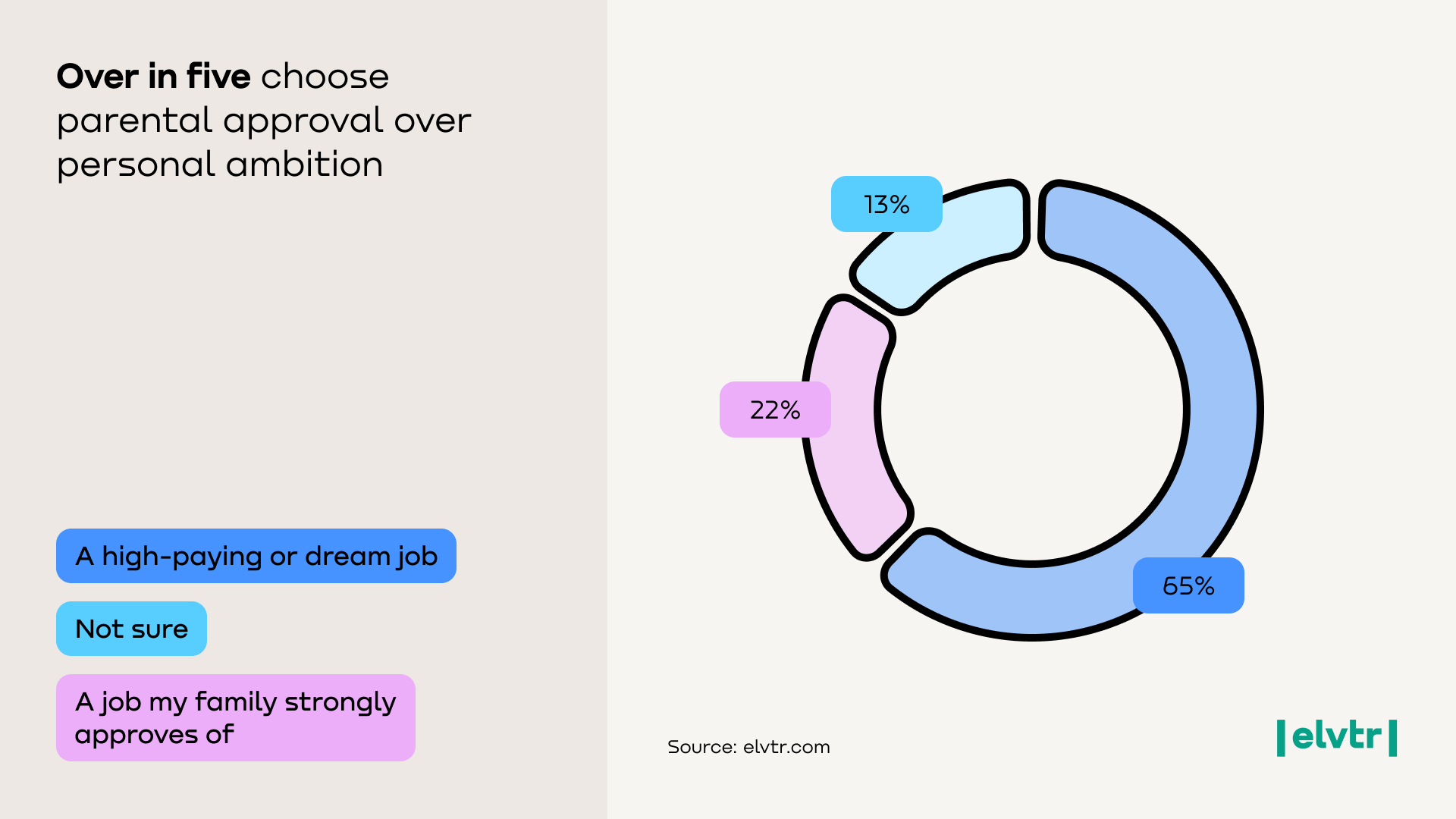
A surprising 22% of young professionals would give up their dream job just to win family approval. While the majority chase their own career goals, a notable minority — over one in five respondents — would settle for a job their family strongly supports, even if it’s not what they truly want. This shows that for some, parental approval can outweigh personal ambition, highlighting the lingering influence of family expectations on career decisions.
Today’s young professionals are walking a tightrope between familial love and personal ambition. They crave their parents’ approval (who doesn’t?), but unlike previous generations, they won’t live or die by it. The survey shows a generation that is respectful but assertive: happy to explain their unconventional job to Grandma, but ready to push back – or tactfully obscure the truth – if judgments start flying. In an era of rapid career change and new job titles (how do you explain “UI/UX researcher” to Uncle Bob, the retired electrician?), it’s perhaps understandable that families struggle to keep up. What’s changing is how young people respond: with a polite smile, a selective truth, and an internal mantra that “it’s my life, and I’ll do what’s right for me.” The implications are hopeful. As this cohort ages, family expectations may gradually adjust to new norms – or at least, the conversation around the holiday table might become less an interview and more a genuine dialogue. Until then, if you see a millennial or Gen Z quietly muting themselves on the Zoom family call, cut them some slack. They might just be keeping the peace in the age-old battle of family vs. career.